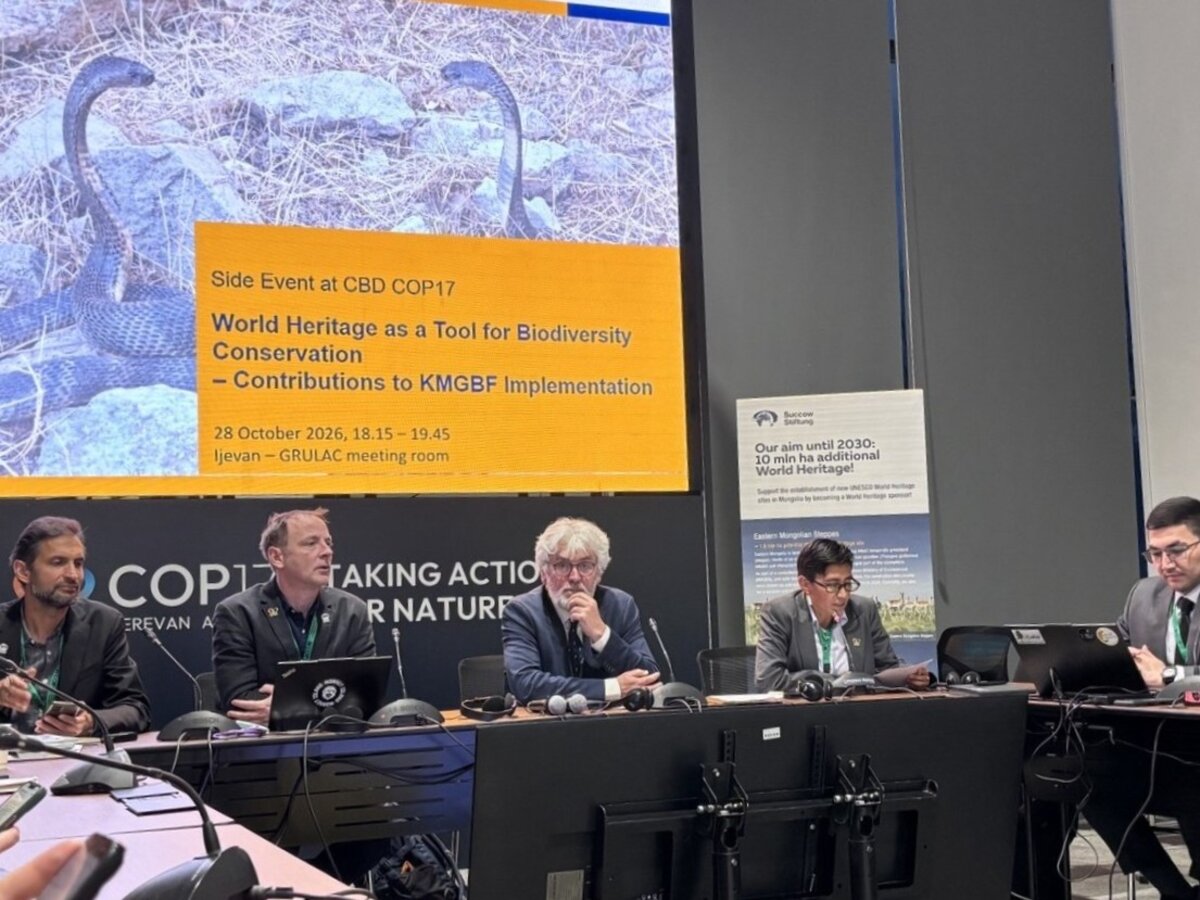
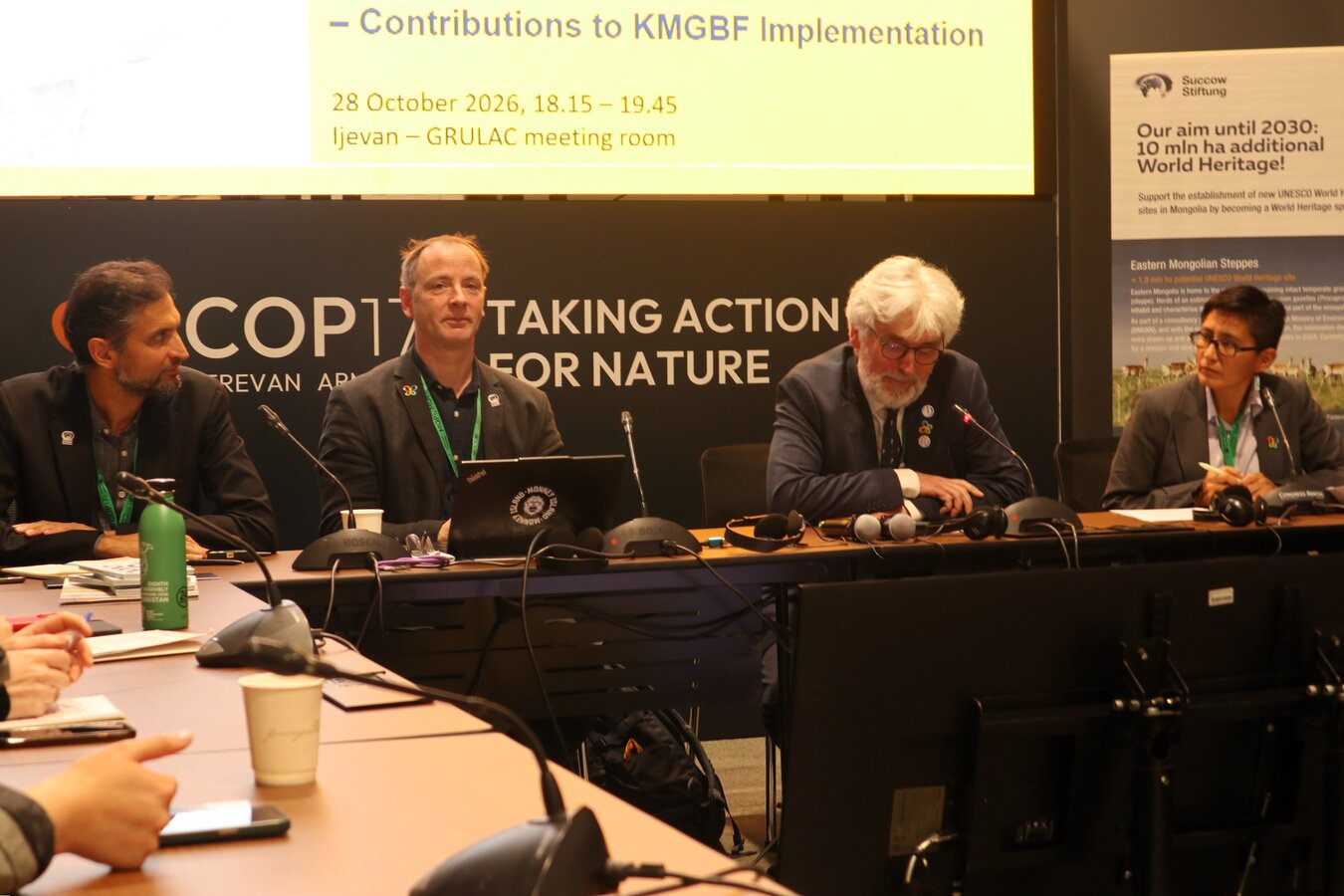
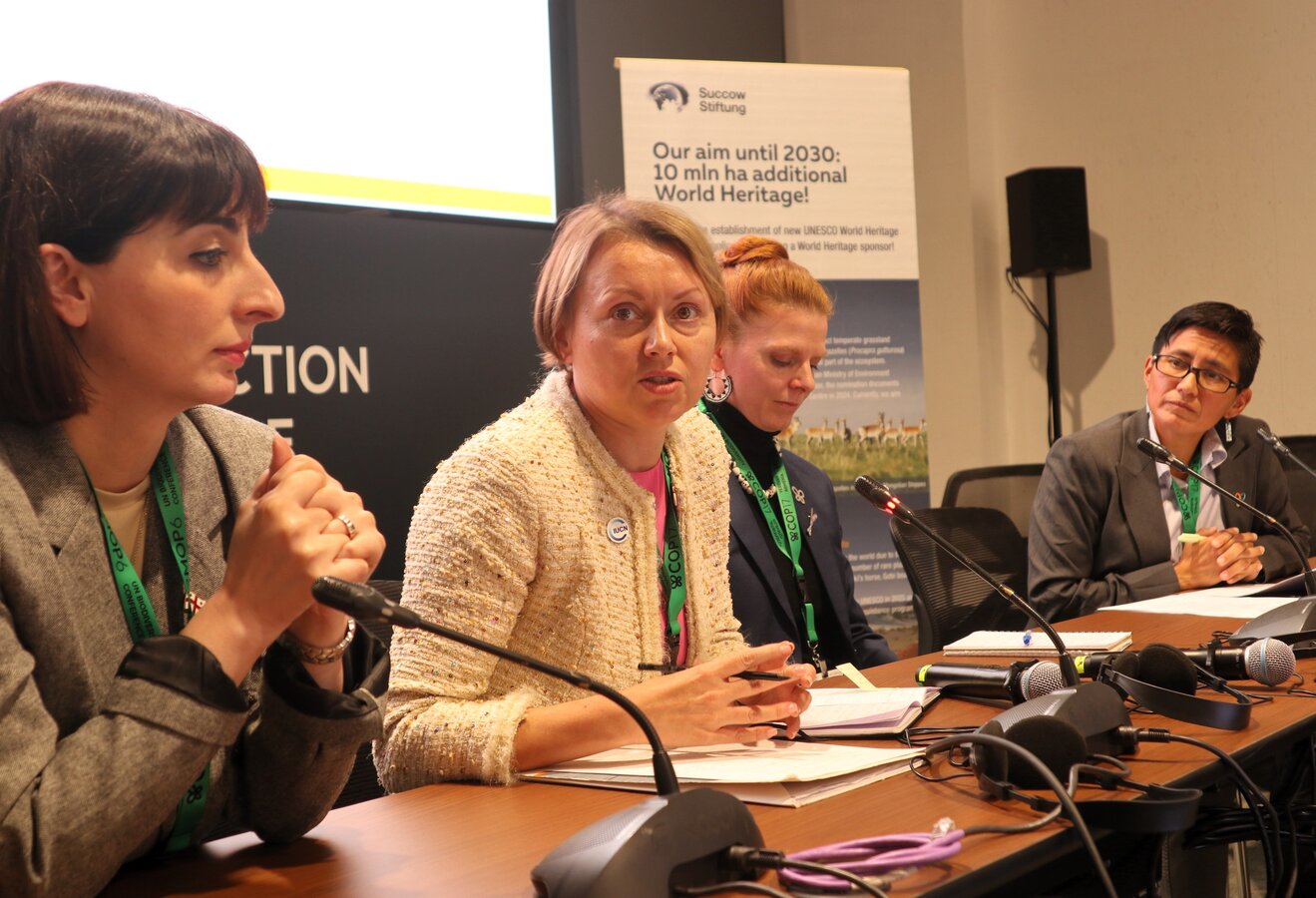
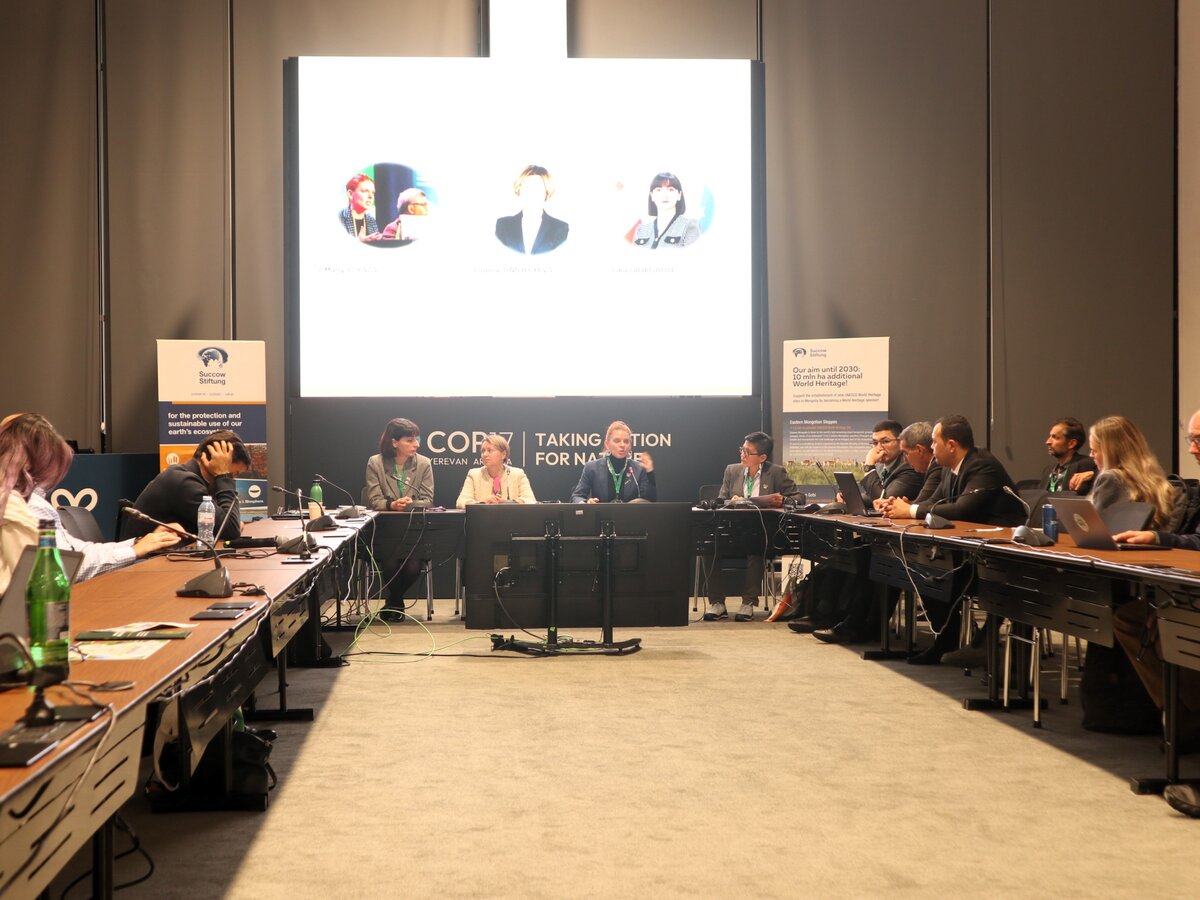
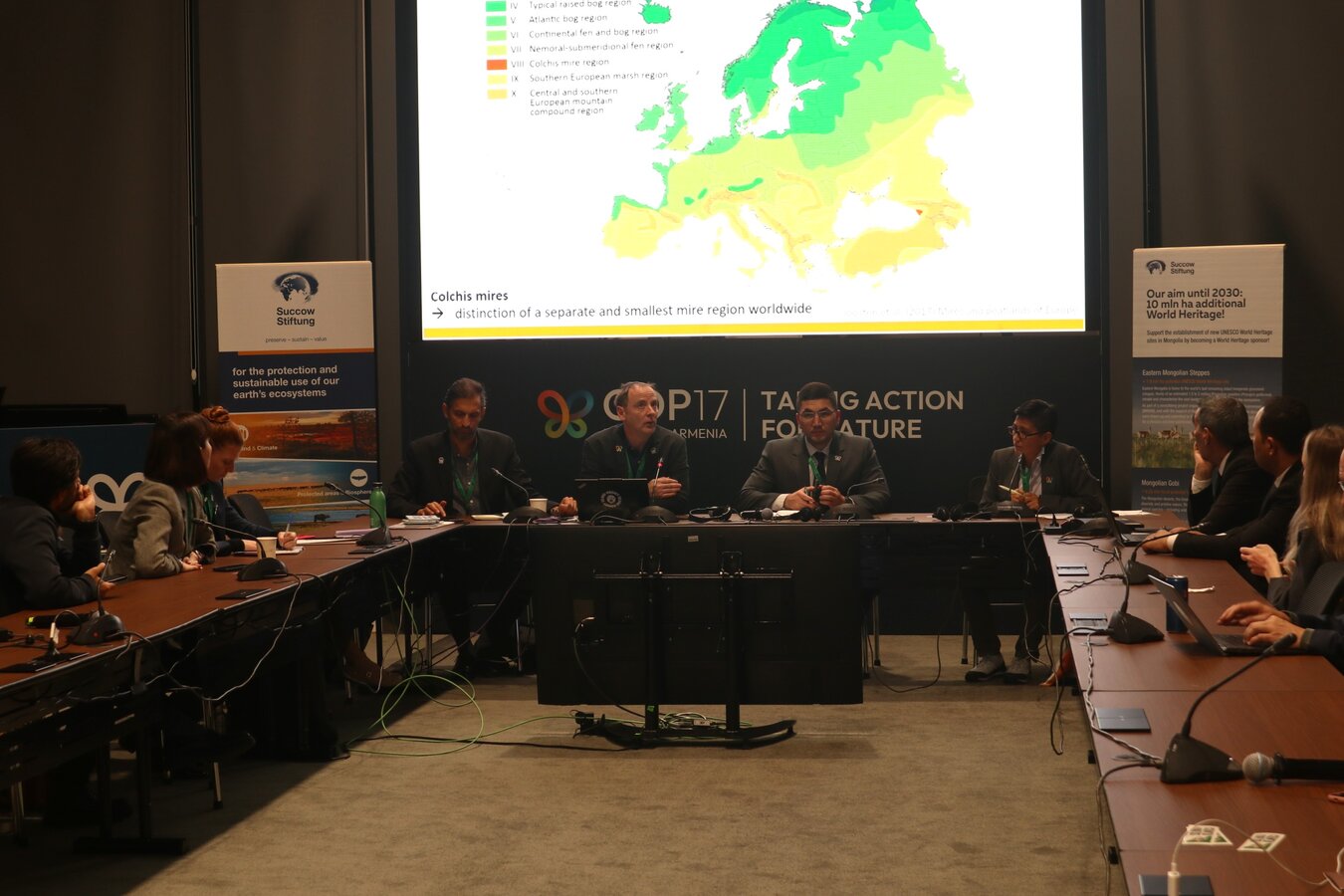
World Natural Heritage is more than an international distinction: it offers important opportunities to protect biodiversity in the long term and to translate global conservation goals into action on the ground. The side event “World Heritage as a Tool for Biodiversity Conservation – Contributions to KMGBF Implementation” therefore focused on how World Heritage sites can contribute to implementing the Kunming-Montreal Global Biodiversity Framework (KMGBF). The event was held as part of the Succow Foundation’s project “One Health for Nature Conservation in Central Asia”.
The side event opened with a keynote by Tim Badman, Director of the IUCN World Heritage Programme. Badman has extensive international experience in the field of natural World Heritage and supports the assessment and protection of significant natural sites worldwide. He explored the links between the World Heritage Convention and global biodiversity goals.
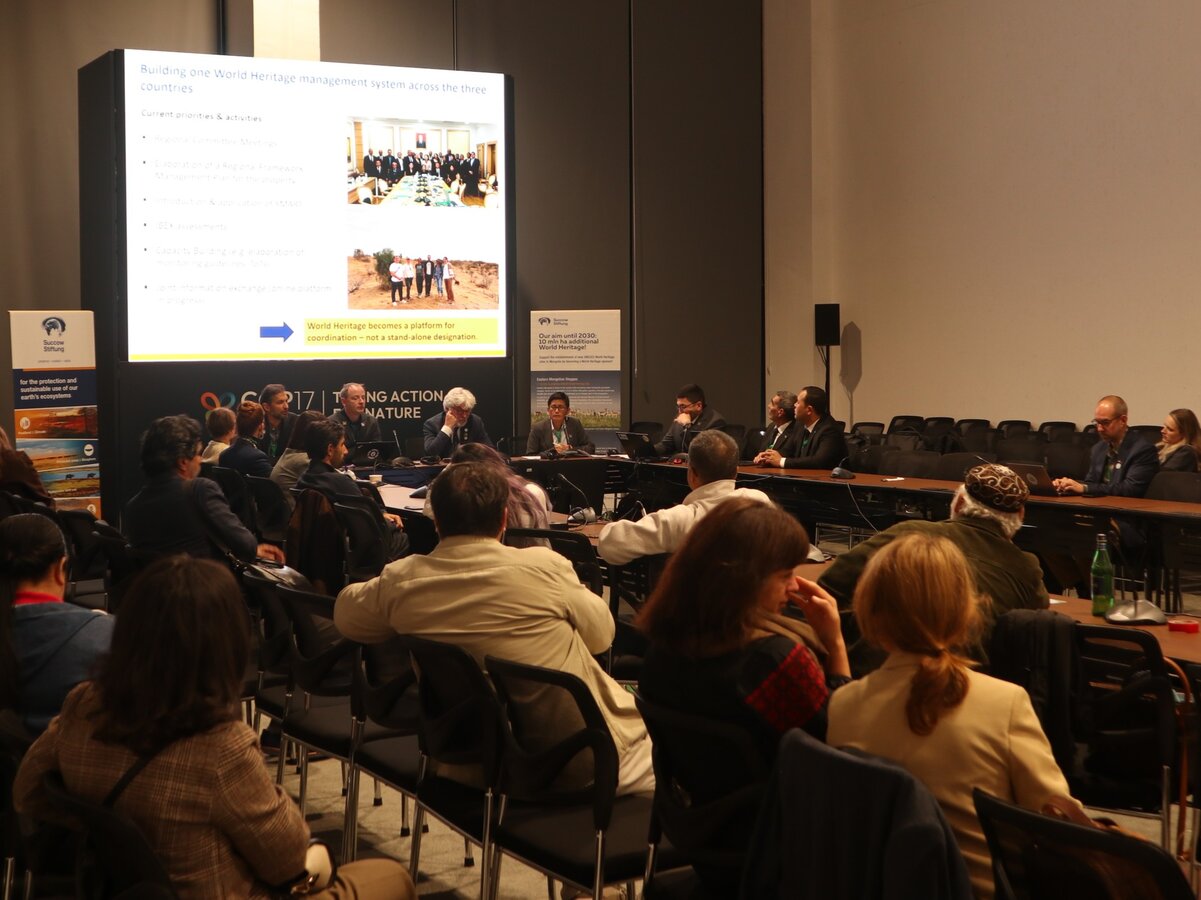
The event then focused on practical examples from Central Asia and the Caucasus, as well as the potential for transboundary cooperation.
Rustam Murzakhanov of the Succow Foundation presented the transnational World Heritage site “Cold Winter Deserts of Turan” as a platform for biodiversity conservation and the implementation of the KMGBF.
Islam Annamamedov of Conservation X Labs explored the prospects for a transboundary World Heritage site in the Kugitang Mountains between Turkmenistan and Uzbekistan.
Ana K. Celis of Karst Lab México addressed the importance of underground ecosystems, while Jens Wunderlich of the Succow Foundation presented achievements to date and future opportunities for World Heritage sites in the Caucasus.
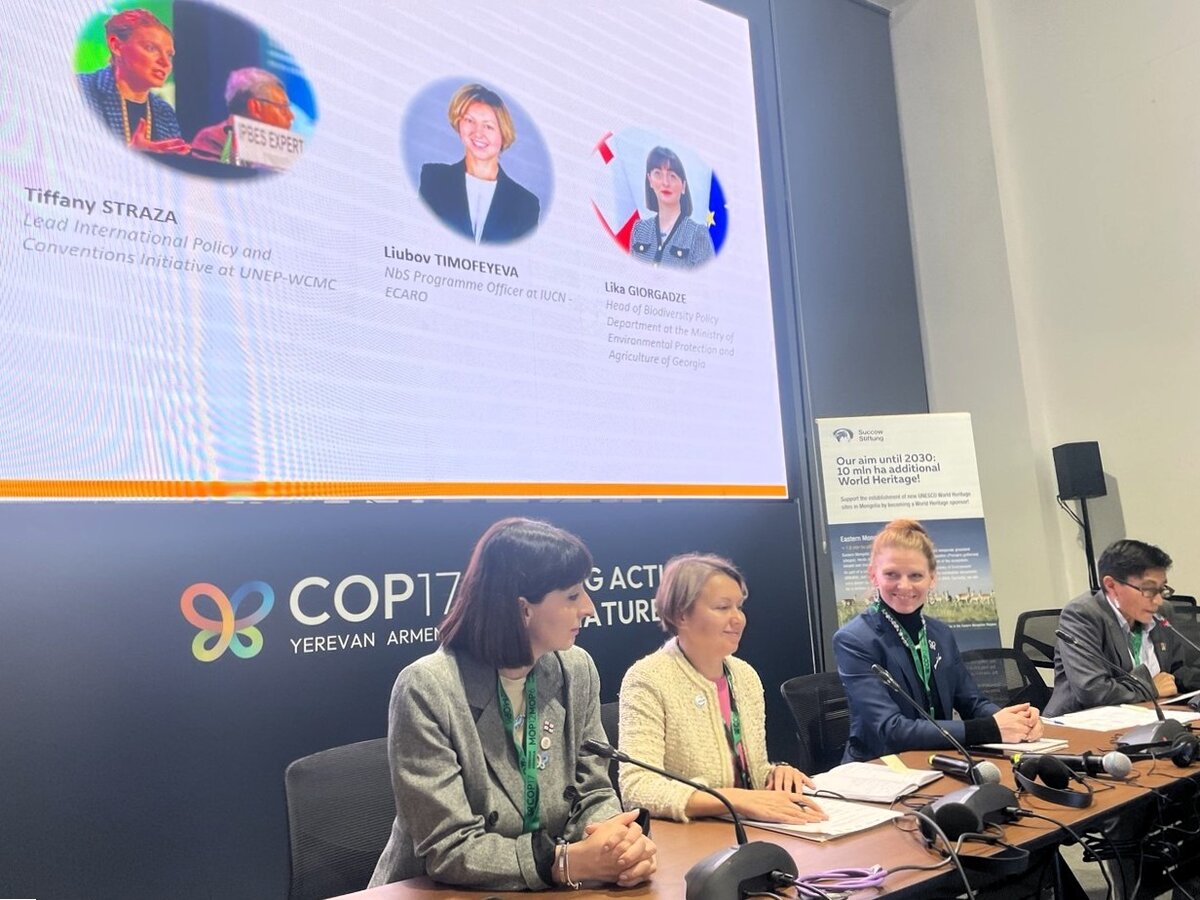
The concluding panel discussion, featuring representatives of UNEP-WCMC, the Georgian Ministry of Environmental Protection and Agriculture, and IUCN, focused on how World Heritage sites can make an even greater contribution to implementing national biodiversity strategies in the future.
The side event highlighted that the World Heritage Convention and the Kunming-Montreal Global Biodiversity Framework offer important opportunities for alignment. Closer integration can help connect international conservation goals with concrete action on the ground and strengthen cooperation across national borders.