![[Translate to EN:] Banner Stiftung](/fileadmin/_processed_/b/c/csm_banner-stiftung_fee6c1c492.jpg)
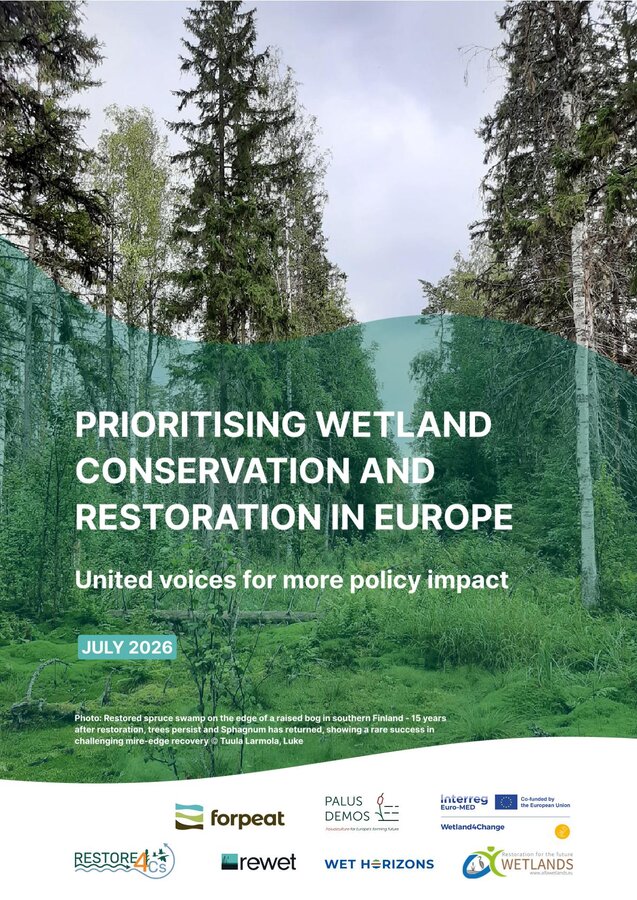
This white paper draws on findings and experiences from multiple EU-funded projects and wetland types across Europe, including REWET, WET HORIZONS, ALFAwetlands, Restore4Cs, ForPeat, Interreg Wetland4Change, and Palus Demos. It highlights how in the current policy landscape, prevalent barriers to implementation can be overcome through prioritizing four policy areas.
Michael Succow Foundation, partner in the Greifswald Mire Centre, made a valuable contribution as consortium member of the ALFAwetlands project. The Upper Peene Valley (Germany, Mecklenburg Western-Pomerania)– an ALFAWetlands Living Lab site - serves as a case study to illustrate how crucial long-term participation is to develop effective restoration initiatives.
Read how better policies can restore Europe's wetlands
Policy recommendations
Despite policy ambition and the urgency of wetland conservation and restoration, effective and large-scale implementation across Europe remains limited. This is primarily due to structural barriers: fragmented governance, misaligned incentives, insufficient financing, uneven implementation capacity, gaps in monitoring, and insufficient participation and social legitimacy.
![[Translate to EN:] Das White Paper identifiziert vier prioritäre Handlungsfelder für politisches Handeln.](/fileadmin/_processed_/2/7/csm_bild_four_cations_alfawetlands_fa3723dec4.jpg "[Translate to EN:] Das White Paper identifiziert vier prioritäre Handlungsfelder für politisches Handeln.")