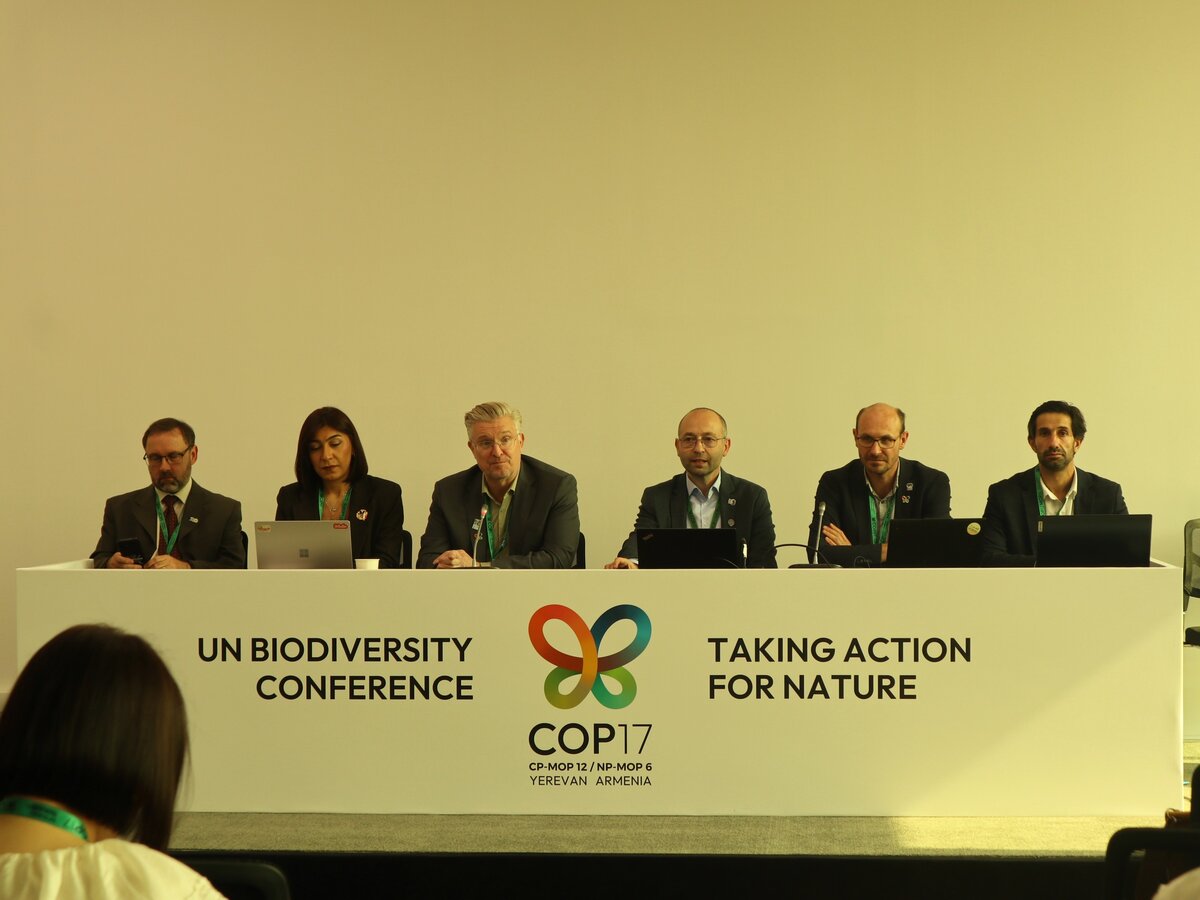
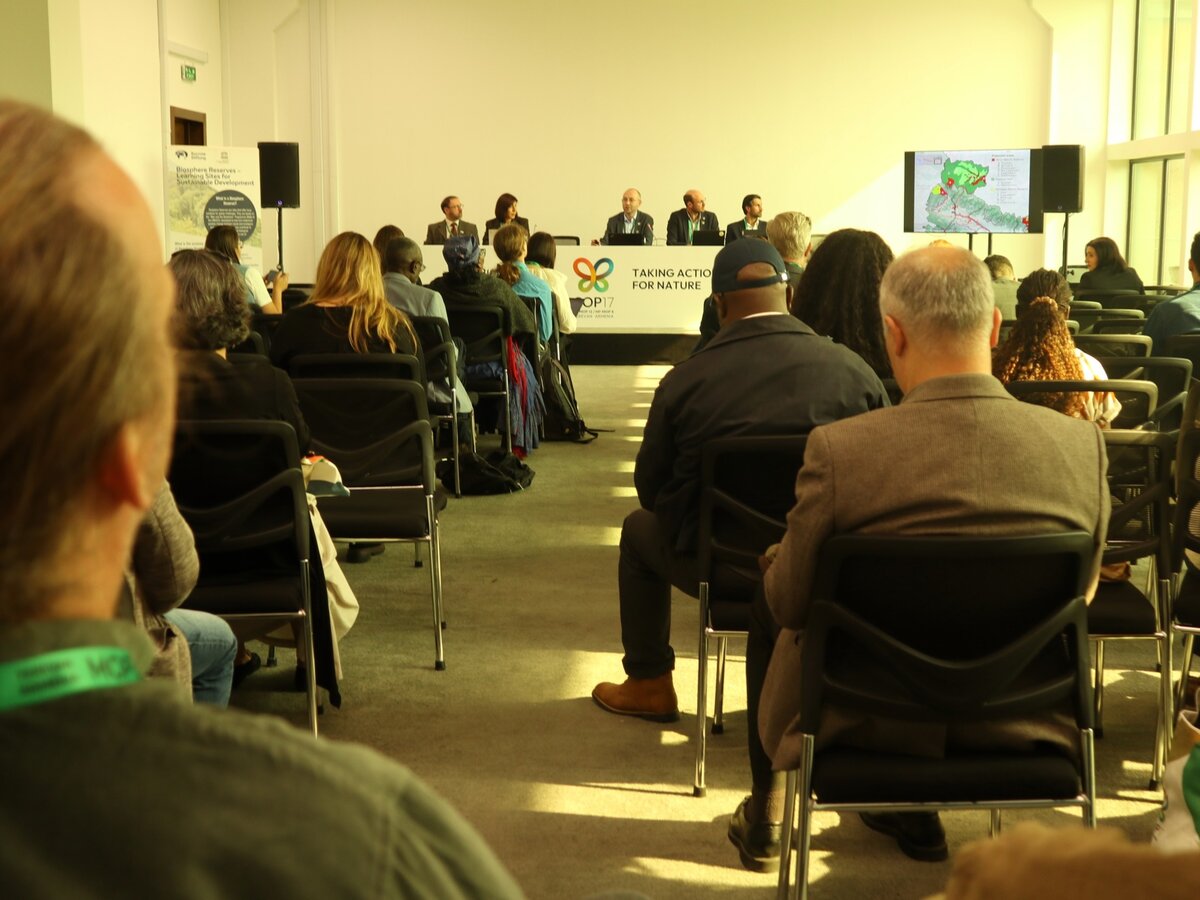
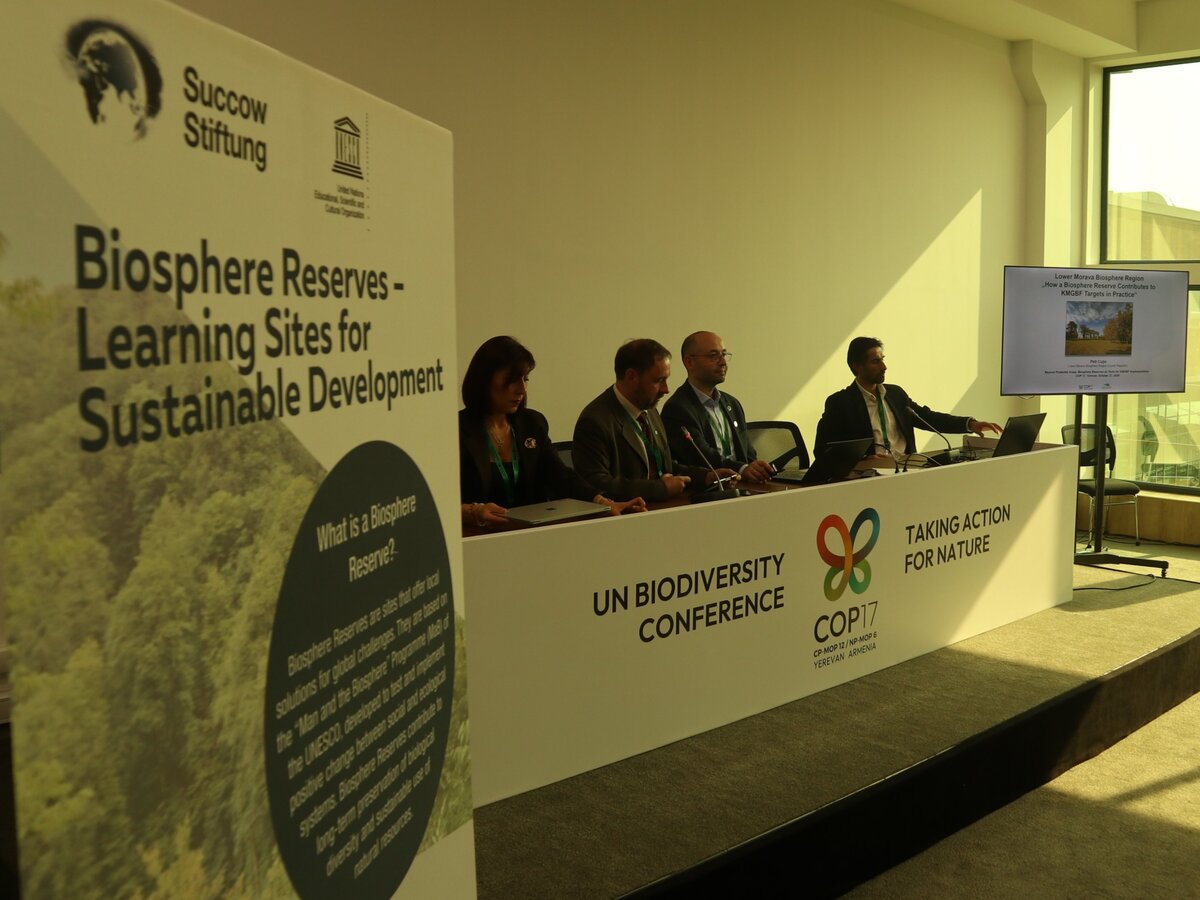
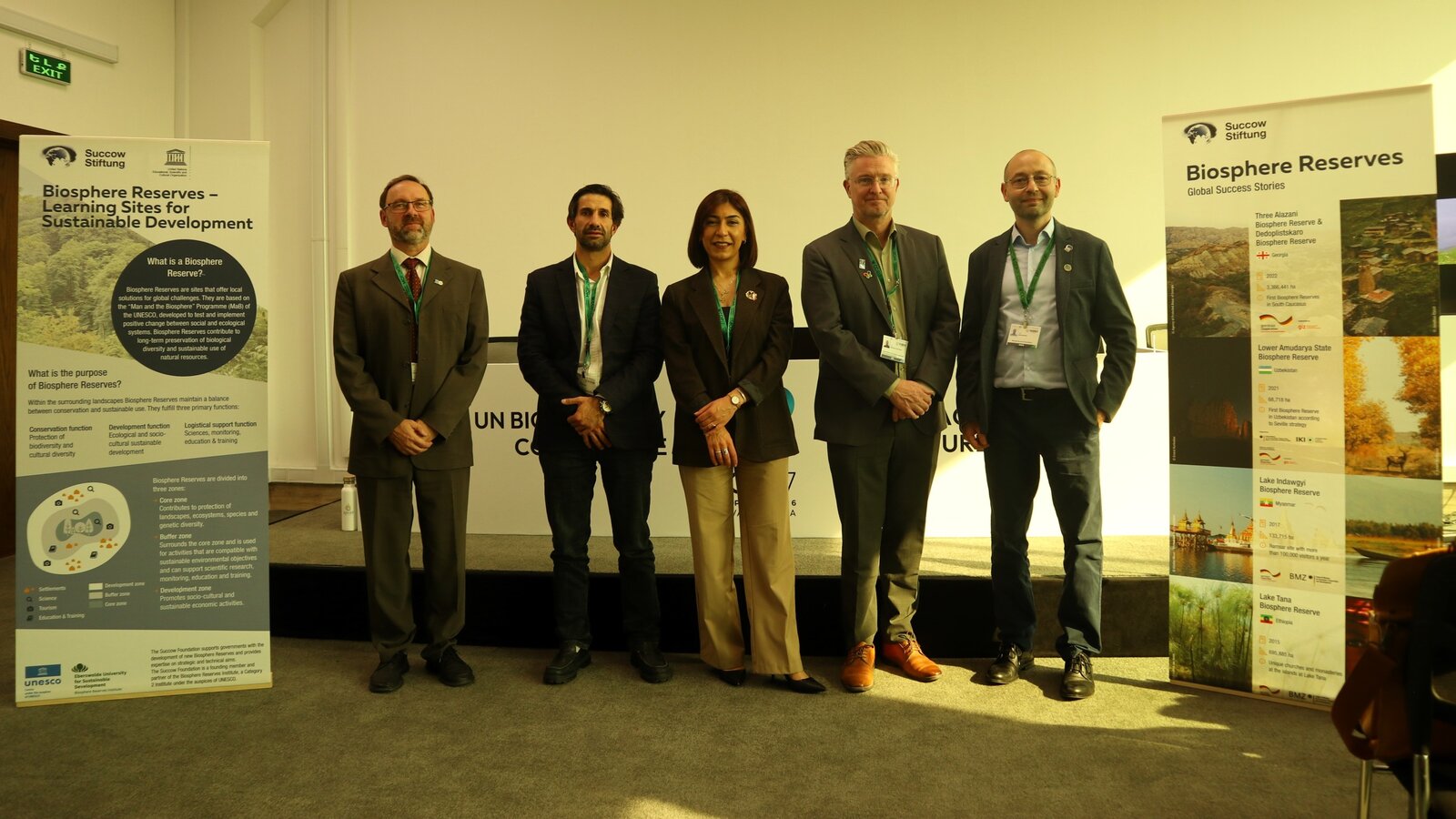
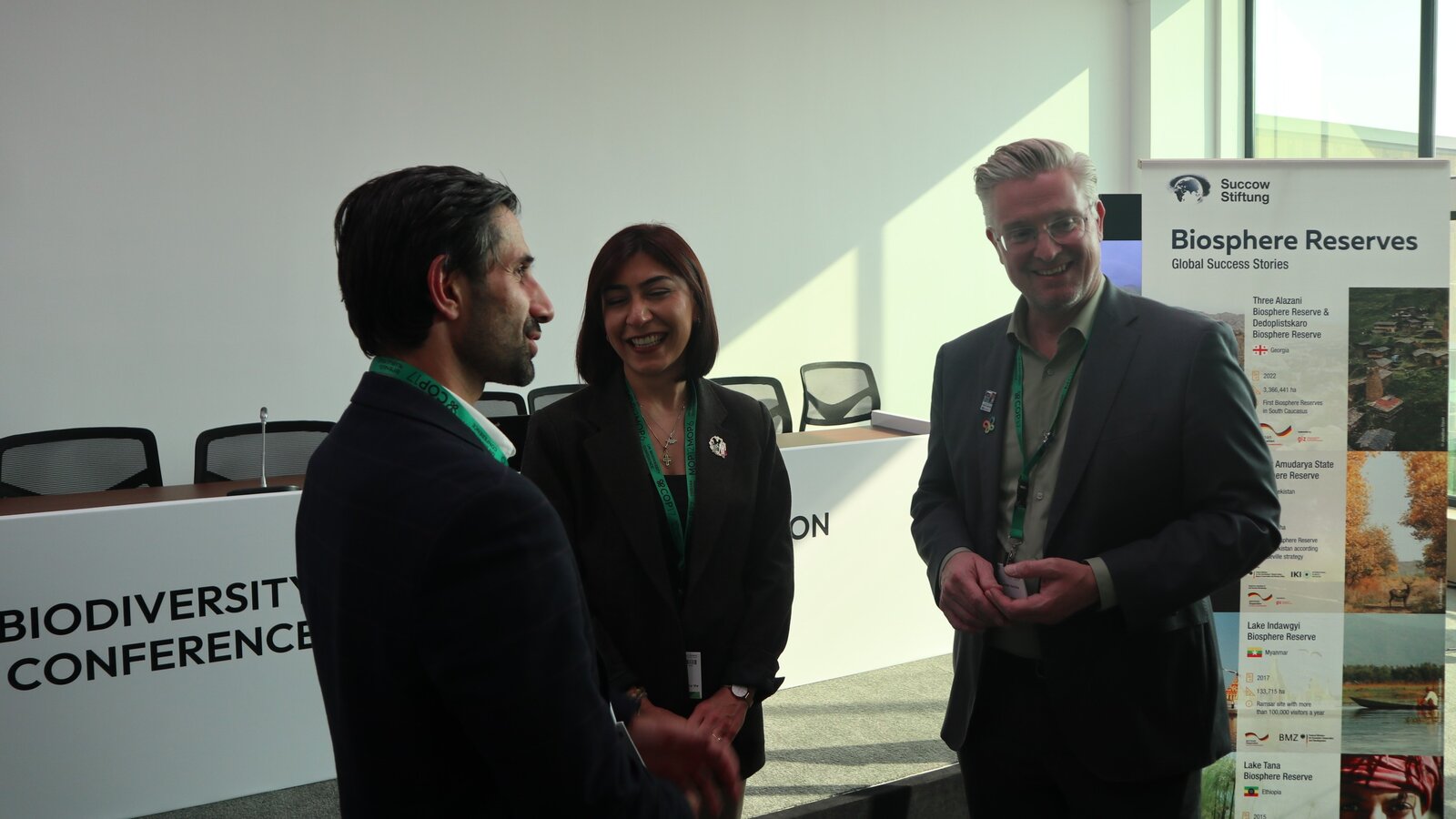
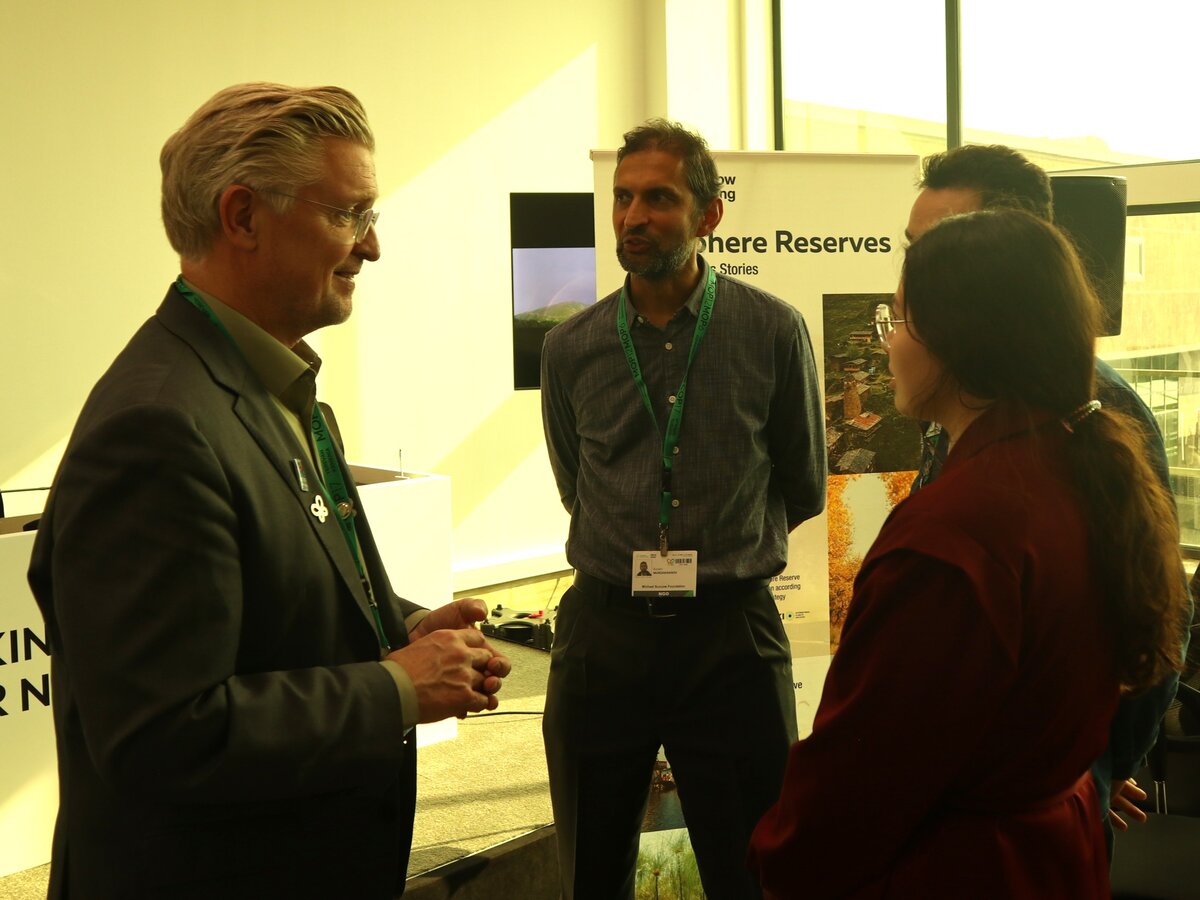
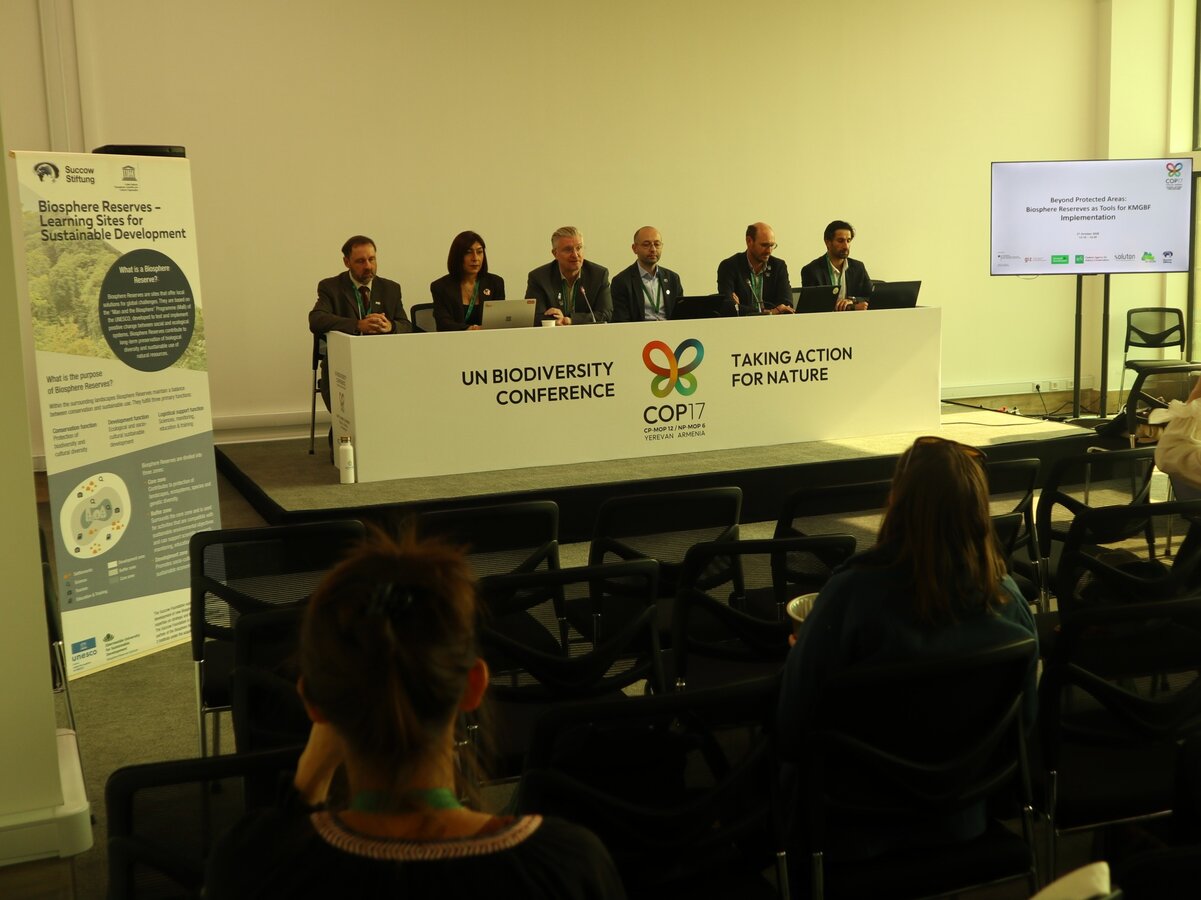
Following introductory remarks by Jan Peters, Managing Director of the Michael Succow Foundation, and Hans Thulstrup, Head of MAB Programme Networking, Biosphere Reserves and Capacity Building at UNESCO in Paris, Nika Malazonia, Project coordinator at Succow Foundation, provided an overview of the structure and nomination process of Biosphere Reserves. He explained how Biosphere Reserves go beyond the conventional protection of areas by connecting nature and people. The involvement of all relevant stakeholders, continuous learning and collaborative governance are key to this approach.
The nomination process begins with an assessment of the area’s ecological and socio-economic values. Building on this, a shared vision and clear objectives are developed together with relevant stakeholders. These form the basis for the management plan and zoning of the proposed Biosphere Reserve, laying the foundation for effective nature conservation and sustainable development.
Areg Karapetyan, Director of Soluton LLC, the Michael Succow Foundation’s implementing partner in the development of Armenia’s first Biosphere Reserve, highlighted the potential positive impacts of the proposed Biosphere Reserve on the city of Dilijan and presented the current progress of the nomination process.
Experiences from neighbouring Georgia illustrated how Biosphere Reserves can translate these ambitions into tangible local benefits. Nino Nadibaidze from REC Caucasus presented the experience of a Georgian Biosphere Reserve established in 2022. He highlighted how the designation strengthened a sense of local ownership, connected municipalities through dialogue platforms and supported capacity development. The development of sustainable tourism was also presented as an opportunity to strengthen local economies.
Finally, Petr Cupa, Director of the Lower Morava Biosphere Reserve in the Czech Republic, explained how Biosphere Reserves can contribute to the objectives of the Kunming-Montreal Global Biodiversity Framework (KMGBF). Examples included the development of sustainable tourism to reduce biodiversity loss in line with Target 1, as well as the revitalisation of aquatic ecosystems near local towns in line with Target 2.
In conclusion, Petr Cupa emphasised the importance of inclusive community participation and approaches tailored to the management needs of each Biosphere Reserve.
The exchange provided valuable insights for the ongoing nomination process of Armenia’s first Biosphere Reserve in Dilijan and highlighted the potential of Biosphere Reserves to connect biodiversity conservation with sustainable development.