![[Translate to EN:] Banner Stiftung](/fileadmin/_processed_/b/c/csm_banner-stiftung_fee6c1c492.jpg)
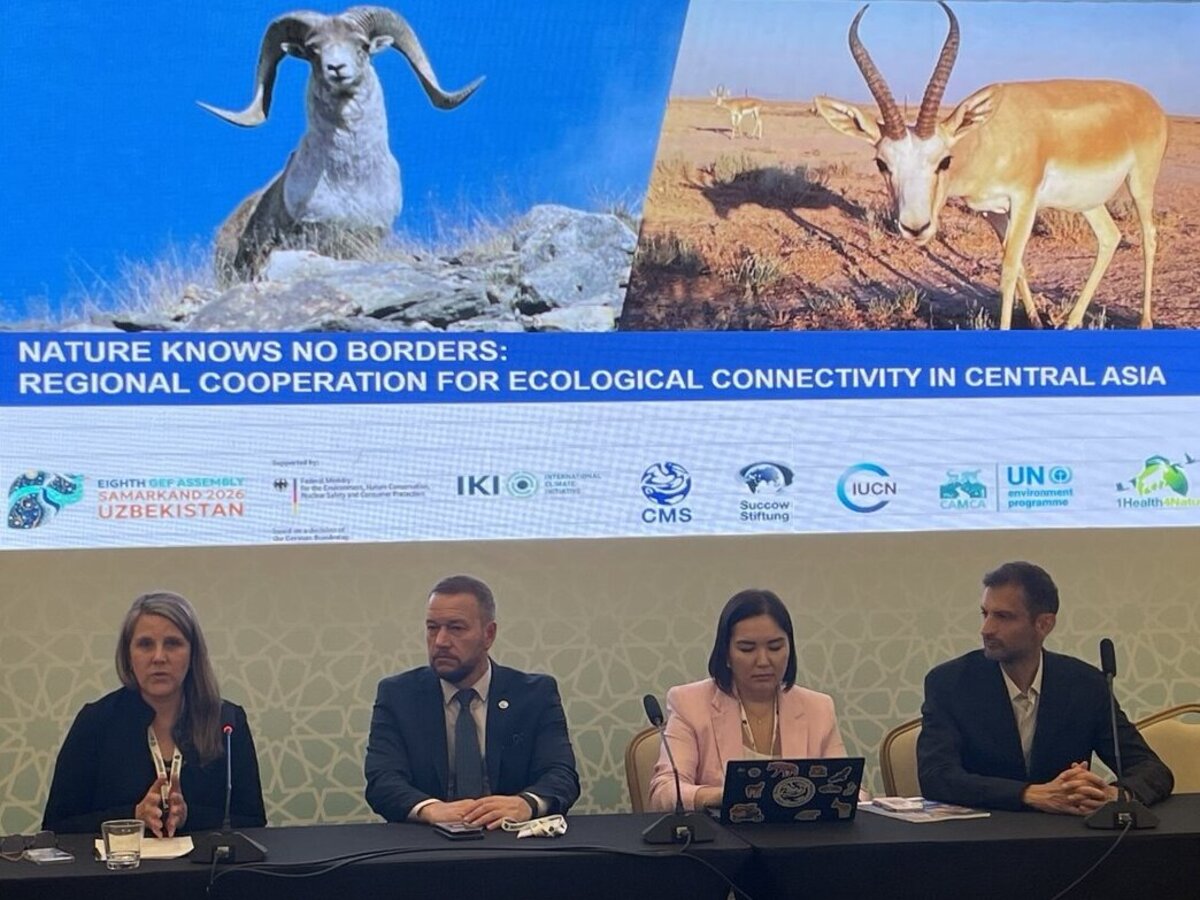
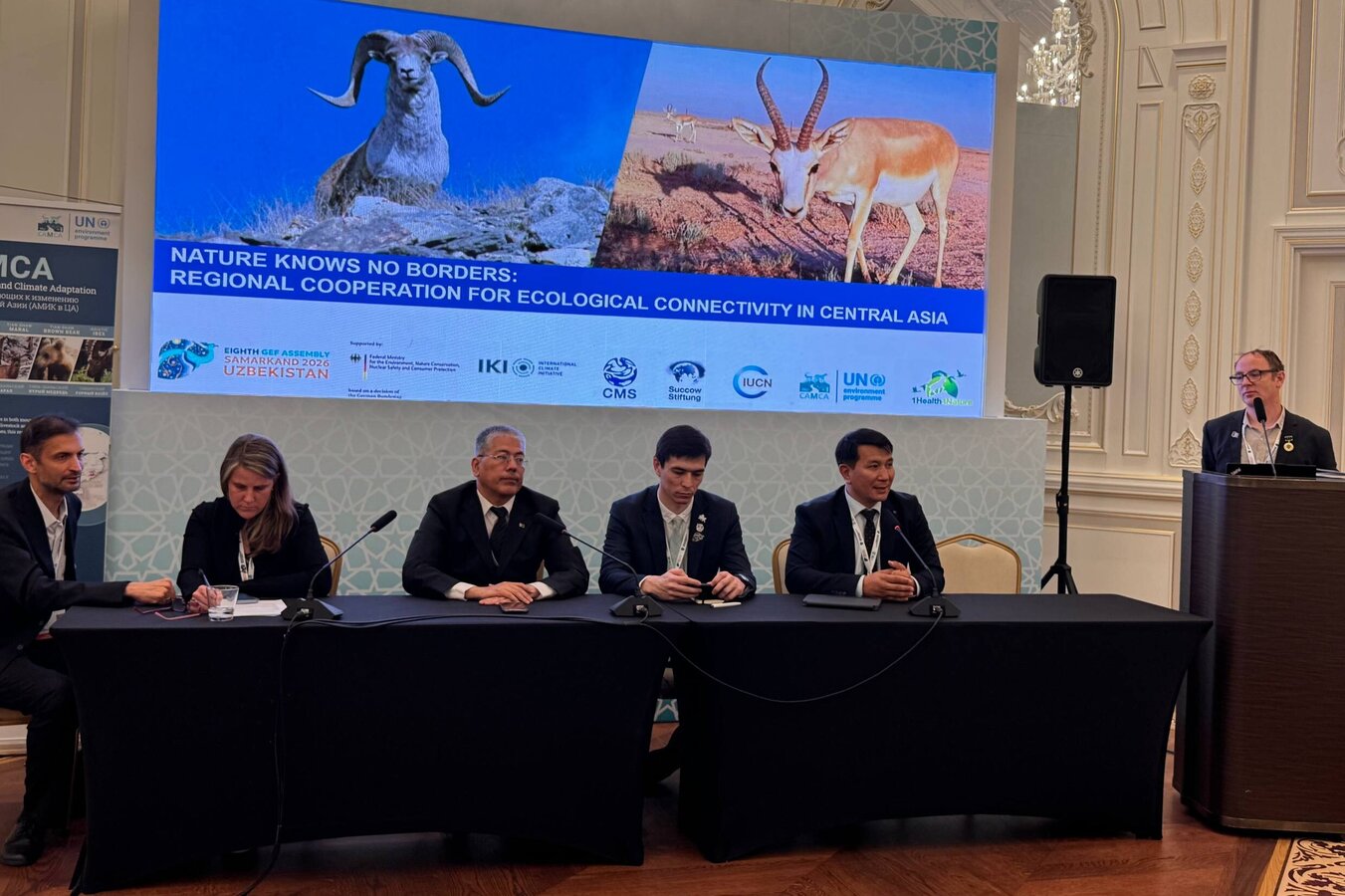
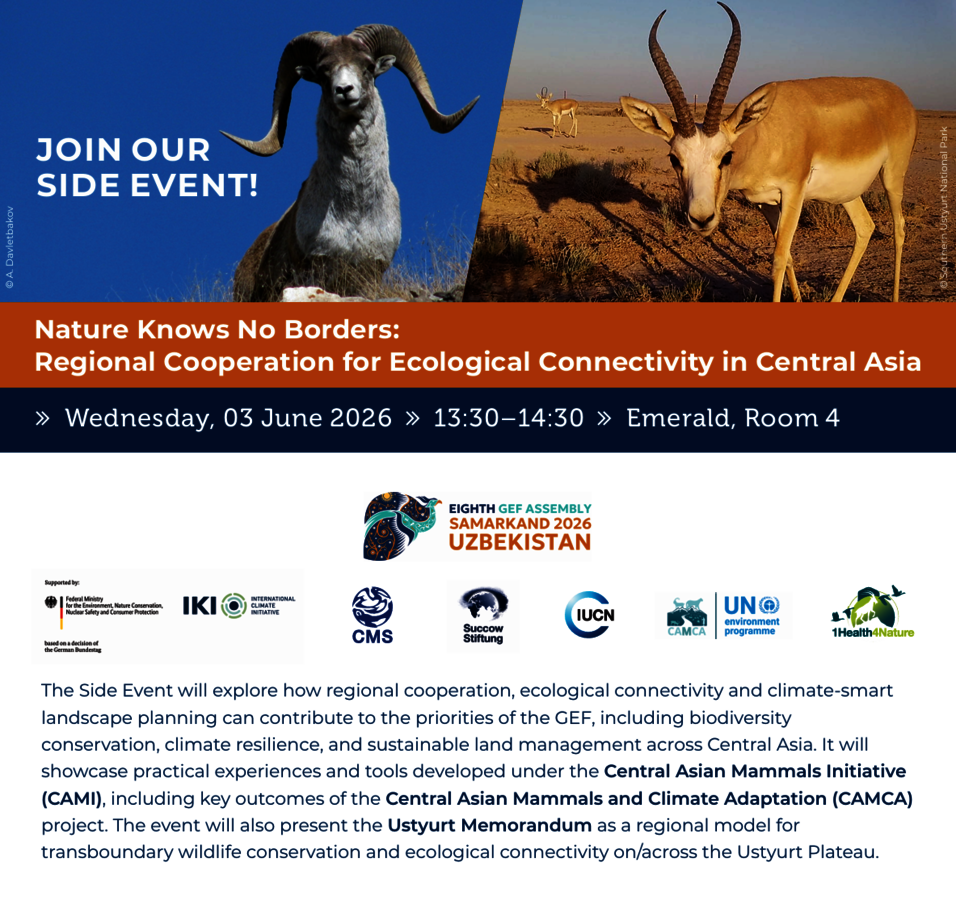
The event highlighted Central Asia’s growing role as a leader in transboundary environmental cooperation. Participants from governments, international organizations, conservation institutions and development partners emphasized that ecological connectivity is essential for maintaining healthy ecosystems, supporting climate adaptation and safeguarding migratory wildlife across the region.
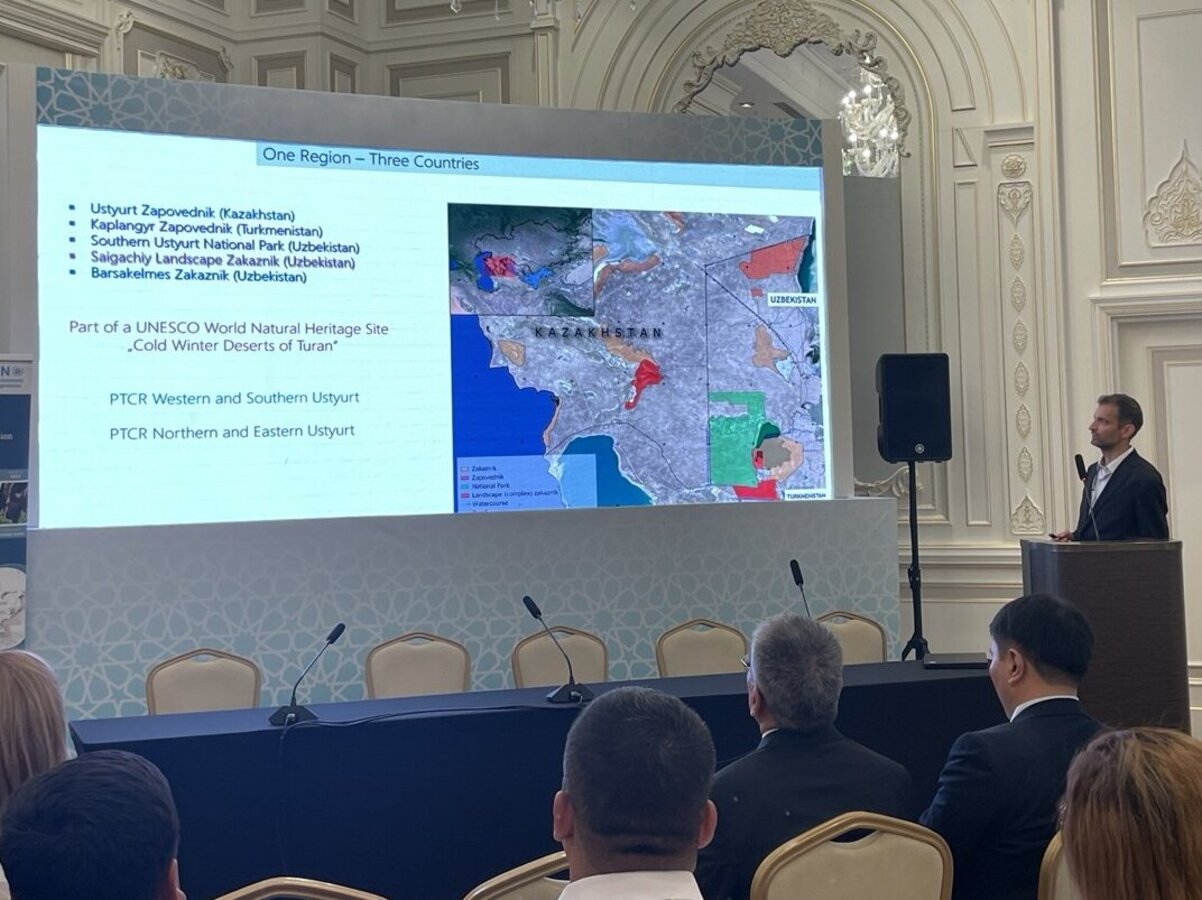
The discussion showcased successful regional initiatives, including the Central Asian Mammals Initiative (CAMI), the Central Asian Mammals and Climate Adaptation (CAMCA) project and the Ustyurt Memorandum of Cooperation. These examples demonstrate how international commitments and political agreements can be translated into coordinated action on the ground.
Participants also stressed the significant progress made in recent years through the establishment of regional partnerships, practical cooperation frameworks and growing political commitment among Central Asian countries. Ecological connectivity was recognized as a strategic investment area for future efforts in landscape-scale conservation, land restoration, climate resilience and wildlife-friendly infrastructure.
A key outcome of the event was the shared recognition that Central Asia is well positioned to serve as a model for regional environmental cooperation. The discussion further underscored the importance of maintaining political momentum and turning existing commitments into concrete projects that deliver lasting benefits for nature, climate and local communities.
The main takeaway from the event was clear: Central Asian countries are increasingly transforming regional political commitments into practical action for ecological connectivity, creating new opportunities for biodiversity conservation, climate resilience and sustainable development. Participants also welcomed the Global Environment Facility’s continued commitment to supporting regional and national engagement in Central Asia through future GEF programming.
Photos: Fariza Adlibekova